

How to Clean Pavers Without Damaging Them: A Los Angeles Homeowner's Guide
Learn how to clean pavers safely, from oil stains and efflorescence to weeds and hard-water marks. A practical guide for Los Angeles homeowners.
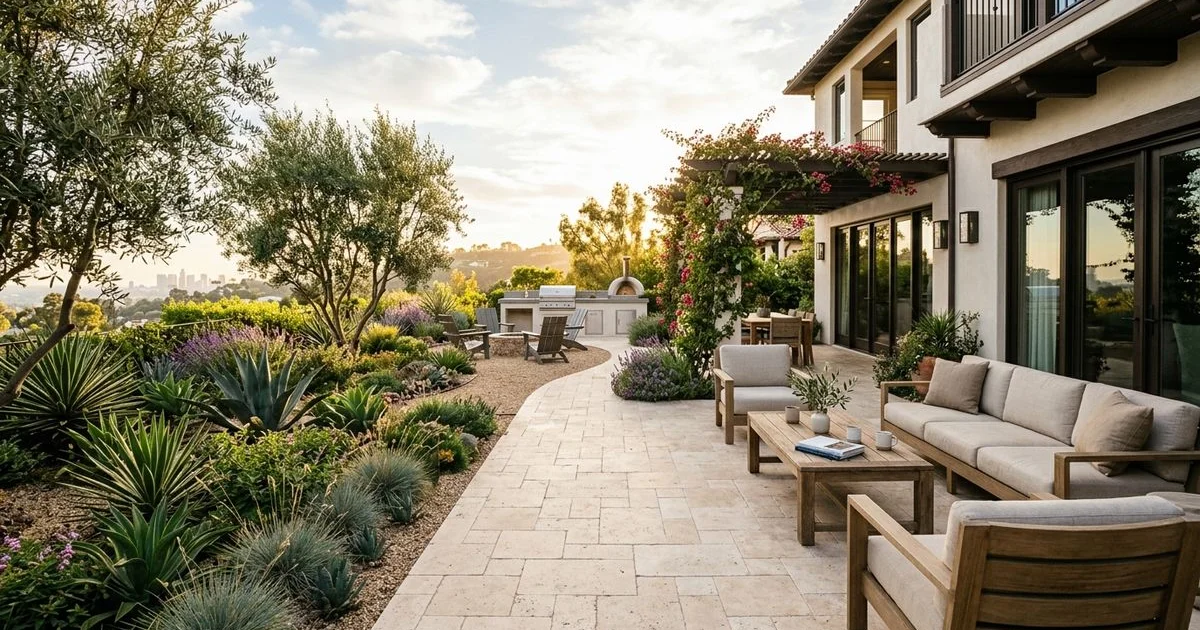
Our team consistently sees that maintaining hardscapes in Southern California requires a completely different approach than standard national advice. The local climate creates a unique stack of problems. You are dealing with hard-water spotting from sprinkler overspray, oil stains baked into the concrete by 100-degree summer heat, and stubborn efflorescence fueled by dry Mediterranean air.
We also have to manage the fallout from Santa Ana wind events. Wildfire ash acts like a micro-abrasive on stone surfaces.
Pasadena and San Marino homeowners face an extra set of challenges. Local historic-district guidelines and strict HOA rules dictate exactly what chemicals you can use.
Let’s look at the specific environmental factors driving these stains, outline the precise cleaning methods for each material, and explore a few practical ways to respond to local restrictions.
Why pavers get dirty (and why LA is tougher)
Pavers accumulate grime for ordinary reasons everywhere, but Los Angeles introduces a harsh climate stack. Foot traffic grinds in dust, tree litter drops sap, and patio furniture leaves rust rings.
Our local environment accelerates this deterioration. Long dry spells allow mineral-rich sprinkler water to bake onto the surface. This leaves white calcium spots and rust halos around irrigation emitters. The Mediterranean heat warms the pavement enough that oil from cars and outdoor grills bonds into the pore structure rapidly.
We see significant issues after a Santa Ana wind event. Wildfire ash coats everything in a fine layer. A 2026 insight from local pressure washing pros notes that this ash acts as a micro-abrasive. If you hit dry ash with a standard leaf blower, you create a hazardous silica cloud. A high-pressure hose will simply grind the ash deeper into the stone pores.
Local topography also plays a major role in the cleaning cycle.
- Hillside neighborhoods like La Cañada Flintridge drain runoff across patios.
- This runoff carries fine sediment down from the San Gabriel Mountains.
- The soil deposits directly into your joint sand.
Once the causes of yard flooding are ignored, a patio gets dirty three times faster than normal. Fixing the underlying drainage problem is the only way to make your cleaning efforts last and reduce unnecessary water usage.
Identify your paver type before you pick a cleaner
Matching the exact chemical to your specific paver material prevents permanent damage. Choosing the wrong acid can strip the protective sealer off porcelain or dissolve the finish on natural stone in a single afternoon.
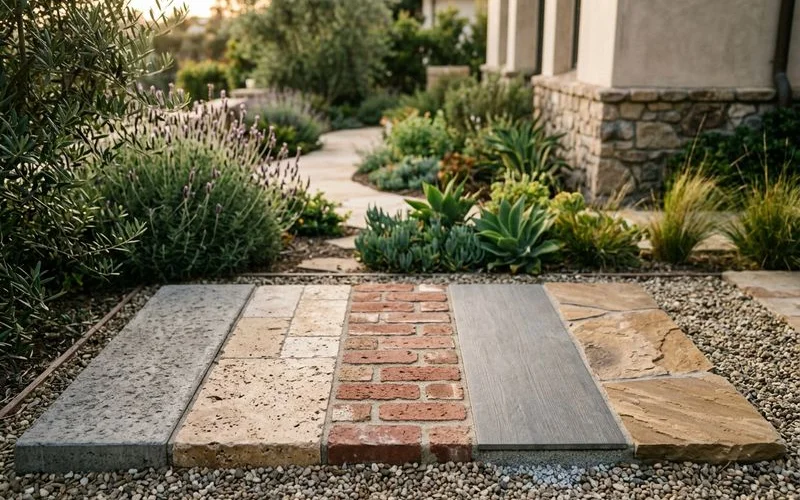
Concrete pavers
Concrete is the dominant choice for driveways across Los Angeles County. You will see local brands like Belgard, Angelus Block, Acker-Stone, and Pavestone in almost every neighborhood. These materials tolerate oxygen bleach, dish soap, and degreasers very well.
Our technicians prefer using sodium percarbonate mixed with a standard dish soap for routine washes. A pure powder like OxiClean Versatile Free works beautifully because it lacks artificial dyes that might stain lighter concrete. These units also handle a careful pressure wash if you stay within safe PSI limits.
Natural stone (flagstone, bluestone, basalt)
Natural stone is softer and far more porous than manufactured concrete. You must completely skip acidic liquids like vinegar, muriatic acid, and citric blends.
“A stiff wire brush leaves microscopic scratches that trap dirt, and shedding wire bristles will quickly rust in the coastal morning fog.”
We recommend an oxygen-based alkaline formula, such as STAIN-PROOF Alkaline Cleaner, to safely lift organic stains. Always use a soft nylon-bristle brush.
Travertine
Travertine is the classic choice for Mediterranean-revival architecture and pool decks. You need to treat it with extreme care and avoid aggressive pressure washing entirely.
This material features natural pits and fissures that easily trap environmental dust. A dedicated enzyme product, like STAIN-PROOF Daily Floor Cleaner, penetrates those fissures without degrading the stone. You should apply it with a very soft brush to lift the dirt without enlarging the natural pits.
Brick
Most brick patios in our area consist of fired clay, which remains highly reactive to chemicals. Muriatic acid will quickly lighten the clay pigment and blow out the surrounding mortar joints.
Our approach to heavy mortar haze involves strict rules:
- Use a buffered hydrochloric acid like Detergent 600.
- Follow the manufacturer’s dilution rates precisely.
- Keep water pressure below 1,500 PSI to avoid pitting the face.
- Use standard mild detergents for routine dirt.
Porcelain
Porcelain represents the newest category for contemporary builds in Beverly Hills and Culver City. This material boasts a water absorption rate under 0.5 percent, making it nearly impervious to liquid stains.
Almost any standard cleaner is safe for the porcelain body. The true risk involves damaging the surrounding joint sand or sealant. If you find stubborn calcium deposits from sprinkler overspray, a wet pumice stone works perfectly to gently scrape off the minerals without scratching the glaze.
Tools and supplies for routine cleaning
A dedicated, reusable cleaning kit handles the vast majority of hardscape maintenance across the year. Building this kit once means your weekend chore takes thirty minutes instead of three hours.
We suggest assembling the following specific items to streamline the process:
- A stiff push broom for dry debris.
- A soft nylon-bristle deck brush attached to a long handle.
- A garden hose equipped with a water-saving shower nozzle.
- A 1-gallon or 2-gallon pump sprayer for applying chemicals evenly.
- A tub of dye-free oxygen bleach and mild dish soap.
- A bag of cheap clay cat litter for fresh oil spills.
You can purchase a heavy degreaser or an efflorescence remover for specialized jobs later. Skipping the wire brushes and raw muriatic acid for routine work will save you from expensive repair bills.
Step-by-step routine cleaning
This specific maintenance cycle should run every three to four months on a standard Los Angeles driveway. A 400-square-foot section typically takes about one hour to complete.
- Clear and sweep. Move all furniture, heavy planters, and the barbecue grill. Sweep the entire surface with a stiff push broom to remove loose dust and pet hair.
- Pre-rinse. Wet the area using a fan nozzle, starting from the highest corner and pushing water to the opposite edge. Working downhill keeps debris out of the joints.
- Apply cleaner. Mix your oxygen bleach with warm water according to the label instructions. Using a pump sprayer guarantees a much more even coat than splashing it from a bucket.
- Agitate with a nylon brush. Focus on sections of about ten square feet at a time. Let the oxygen bleach dwell for exactly 10 to 15 minutes before scrubbing the faces and joints.
- Rinse thoroughly. Maintain that same downhill direction. Keep spraying until the runoff is completely clear, as dried soap scum will leave visible streaks. A high-efficiency spray nozzle conserves water to comply with local drought restrictions.
- Air dry and spot treat. Walk the hardscape once it dries and mark any persistent stains. Those specific spots become the priority for your next deep clean.
Our experience shows that maintaining this simple routine prevents deep stains from setting into the pores. Consistency always beats harsh intensity.
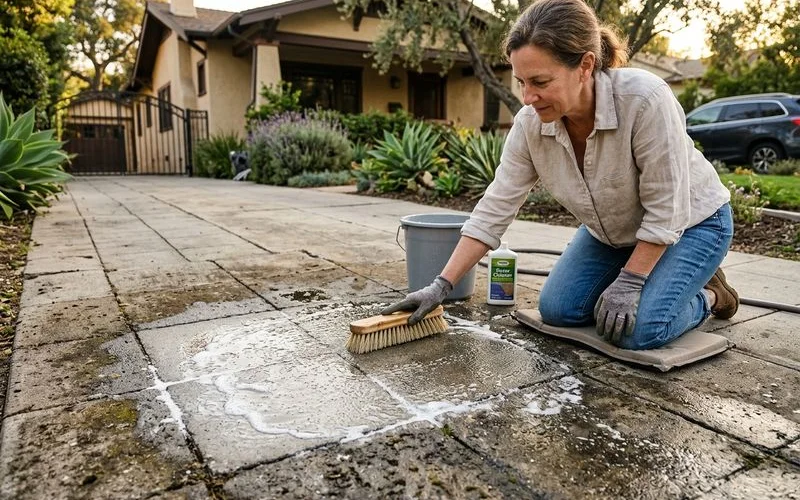
Pressure washer? Use it carefully or not at all
A pressure washer feels like an easy shortcut, but it causes massive damage in untrained hands. You should only fire up a machine when a soft brush fails completely, and you must operate within strict safety limits.
We see major issues when high pressure blasts the joint sand away. A focused stream lifts the polymeric sand right out of the crevices, inviting aggressive weed growth within a single season. You will need to re-sand any joints you clean with a pressure washer.
If your driveway is heavily stained, a wash and degrease combination can be the right call, but you do not have to do it yourself. Hiring a professional in Southern California to wash a standard driveway averages around $130, or $0.15 to $0.30 per square foot for pavers.
Our team offers a short free assessment to clarify if a gentle wash, a fresh layer of sand, or a complete reseal is the smartest next step.
Common stains and how to treat them
The majority of service calls in the Los Angeles market fall into a few predictable categories. You must match the specific chemical to the exact stain, test it in a hidden corner, and rinse the area thoroughly.
| Stain Type | First-line Treatment | Specific Notes |
|---|---|---|
| Oil and heavy grease | Clay cat litter blot, then a strong degreaser | For baked-in stains, apply a baking-soda poultice for 24 hours. |
| Rust from sprinklers | Oxalic acid powder mixed with warm water | Avoid muriatic acid entirely, it damages the surface texture. |
| Hard water and calcium | Dry-Treat Acidic Cleaner (EFF-ERAYZA) | Use a wet pumice stone gently on porcelain or pool tile. |
| Stubborn efflorescence | A dedicated brand-name efflorescence remover | This white powder often returns on new installs before fading. |
| Algae, moss, and mildew | Oxygen bleach mixed with warm water | Trimming back shade plants improves sun exposure and slows regrowth. |
| Dry wildfire ash | Gentle dry sweep wearing an N95 mask | Wait for healthy air quality, never pressure wash dry ash. |
| Paint, tannins, BBQ sauce | Mild dish soap and warm water applied quickly | Older dried paint usually requires a paver-safe chemical stripper. |
Our specialists frequently remind clients that sprinkler rust will return continuously until the irrigation head is realigned. Efflorescence on a brand-new patio is a completely normal part of the concrete curing process. Notice that chlorine bleach is absent from this chart, as repeated use will permanently lighten the color dyes in the concrete.
Weeds between pavers
Weeds sprouting through the joints point to a sand failure rather than a cleaning deficit. The correct solution is restoring the polymeric sand bed, not spraying heavier doses of toxic weed killer.
You should pull or scrape the existing weeds out manually. Check the depth of the remaining material in the crevices. If the sand sits more than a quarter inch below the angled edge of the unit, those joints desperately need a refill. A pre-emergent herbicide applied in late winter stops new seeds from germinating, but fresh sand physically blocks them from taking root.
This problem directly relates to why pavers shift over time, because loose joints allow the heavy stones to move. We always check the aggregate base layer if both weeds and shifting occur simultaneously.
Re-sanding the joints
Refilling the joints serves as a critical part of the cleaning cycle, not an optional luxury upgrade. You should plan to top up the joint sand every one to three years based on vehicle traffic and sun exposure.
The application process requires strict attention to detail.
- Start with a completely clean and dry surface.
- Pour a high-quality product like Techniseal RG+ Polymeric Sand or Alliance Gator Maxx.
- Broom the sand diagonally into the joints.
- Tap the pavers gently with a rubber mallet to settle the grains.
Our crews carefully sweep every stray grain off the face of the blocks. You must then mist the entire area with a fine spray to activate the binding polymer. Apply the water in two or three light passes, waiting about 30 seconds between each misting, and let the patio cure fully for 24 hours.
Should you seal after cleaning?
Applying a sealer is technically optional, but the intense California sun makes it a highly practical investment. A premium impregnating layer, like STAIN-PROOF Premium Waterborne Impregnating Sealer, blocks motor oil, prevents hard-water rings, and slows UV fading on dyed concrete.
You must follow two strict timing rules for the best results. Wait exactly 90 days after a brand-new installation before sealing it, which allows trapped efflorescence to escape the curing cement. Second, wait a full 48 hours after a heavy wash to guarantee the stone is bone dry.
We typically reseal residential properties every three to five years in this climate. Shaded courtyards last a bit longer, while west-facing driveways degrade faster. You can test your surface easily in the summer by pouring a cup of water on the stones, if the water absorbs instead of beading up, the protective barrier has failed.
How often to clean in LA
A predictable maintenance calendar keeps most residential hardscapes looking pristine. You should perform a light sweep and spot treat every three to four months.
Plan a deep clean with your oxygen bleach routine once a year in the late spring. Top up the polymeric joint sand every one to three years. Apply a fresh coat of impregnating sealer every three to five years.
Our typical advice changes drastically following a major Santa Ana wind event. You must add a gentle dry sweep and a thorough low-pressure rinse to your schedule immediately after nearby wildfires. If your irrigation system sprays directly onto the patio, fix the sprinkler heads first to stop the endless cycle of scrubbing hard-water rings.
When to call a pro
A standard push broom and a bucket of soapy water will handle the vast majority of routine upkeep. You should hire an experienced professional when the job scales beyond basic weekend maintenance.
Bring in a local expert when you encounter these specific situations:
- Motor oil or rust has baked into the concrete for over a year.
- Efflorescence keeps blooming more than 24 months after the initial installation.
- The patio exceeds 800 square feet, meaning a DIY wash will consume your entire weekend.
- The surface features expensive travertine or flagstone and you fear using the wrong chemicals.
- The individual blocks are physically rocking under your feet.
Our professional cleaning service pairs the wash with fresh joint sand and a commercial-grade sealer. This complete reset usually costs around $2.50 per square foot and finishes in just two days. If you want to expand your outdoor living space, our paver patio services and paver driveway services include this full restoration process for existing surfaces.
Local notes: Pasadena, San Marino, La Cañada
Certain environmental regulations and neighborhood rules only matter if you live on the east side of the Los Angeles basin.
Pasadena historic-district properties face strict reviews regarding visible exterior modifications. The Pasadena Historic Preservation program mandates that any cleaning in areas like Garfield Heights must use the gentlest means possible. Upgrading to a high-gloss sealer on a designated historic home usually requires a formal Certificate of Appropriateness.
San Marino HOAs frequently restrict the hours for commercial property maintenance. You must read your specific community guidelines before firing up a loud gas-powered pressure washer on a quiet Saturday morning.
Our teams take special precautions on the hillside lots of La Cañada Flintridge. These steep properties drain directly toward the Arroyo Seco watershed, and the Clean Water Act strictly monitors urban runoff here. You must capture your soapy rinse water and direct it into landscaped soil beds instead of washing chemicals down the street grates.
Reviewing our detailed guide on what hardscape really is places this daily maintenance into the broader context of your complete outdoor environment.
Where the pro takes over
Following the routine outlined in this guide will keep a standard Los Angeles driveway looking sharp for decades. Recognizing the exact moment to stop scrubbing and call for backup represents the other half of responsible homeownership.
If your deep cleaning reveals that the aggregate base layer is failing, a surface wash will not solve the underlying structural issue. Empty joints and sinking stones require immediate attention before the blocks crack.
We encourage homeowners to reach out for a free assessment when the physical structure begins to fail. Our team will determine if your property needs a simple wash, fresh polymeric sand, a chemical reseal, or a complete base excavation.
Schedule your property visit today to protect your investment.
Frequently Asked Questions
Can I use chlorine bleach on pavers?
Does white vinegar clean pavers?
How do I clean pavers around a pool safely?
Can I pressure wash travertine?
Is Simple Green safe for pavers?
How do I get oil stains off paver driveways?
How often should I clean pavers in Los Angeles?
What does paver cleaning cost in LA?
Should I seal pavers after cleaning?
What is efflorescence, and will it come back?
Have questions about a project of your own?
A free on-site consultation, a phased budget tier, and a master plan that fits your property and your goals.